

Updated: 30th September 2026
Small cars remain one of the most practical choices for Indian roads. They are easier to manoeuvre through congested streets, simpler to park, generally more fuel-efficient and usually cheaper to maintain than larger SUVs.
But choosing the best small car in India is no longer simply about finding the cheapest hatchback. Buyers today also expect automatic transmissions, CNG options, six airbags, touchscreen infotainment, good boot space and enough comfort for occasional highway journeys.
From affordable city cars such as the Maruti Suzuki Alto K10 and Renault Kwid to premium hatchbacks such as the Tata Altroz, Maruti Suzuki Baleno and Hyundai i20, there are options across a surprisingly wide price range.
Here are our top 10 small cars in India in 2026, selected after comparing price, practicality, fuel options, safety equipment, features and suitability for everyday Indian driving.
Note: Prices mentioned are approximate starting ex-showroom prices as available in September 2026. Prices, offers and variants may differ by city and can change without notice.
Top 10 Small Cars in India – Quick Comparison
| Car | Starting Price* | Engine | Fuel Options | Automatic Available? | Best For |
|---|---|---|---|---|---|
| Maruti Suzuki Swift | ₹5.84 lakh | 1.2L | Petrol/CNG | Yes | Best all-round small car |
| Tata Altroz | ~₹6.00 lakh | 1.2L petrol / 1.5L diesel | Petrol/CNG/Diesel | Yes | Safety & premium family use |
| Hyundai Grand i10 NIOS | ₹5.60 lakh | 1.2L | Petrol/CNG | Yes | Comfort & city driving |
| Tata Tiago | ₹4.77 lakh | 1.2L | Petrol/CNG | Yes | Value & safety-conscious buyers |
| Maruti Suzuki WagonR | ₹4.99 lakh | 1.0L/1.2L | Petrol/CNG/Flex Fuel | Yes | Space & practicality |
| Maruti Suzuki Baleno | ₹5.99 lakh | 1.2L | Petrol/CNG | Yes | Premium features & space |
| Hyundai i20 | ₹5.99 lakh | 1.2L | Petrol | Yes – IVT | Premium hatchback experience |
| Maruti Suzuki Celerio | ₹4.70 lakh | 1.0L | Petrol/CNG | Yes | Fuel efficiency |
| Renault Kwid | ₹4.53 lakh | 1.0L | Petrol | Yes | SUV-like city car |
| Maruti Suzuki Alto K10 | ₹3.70 lakh | 1.0L | Petrol/CNG | Yes | Budget-first ownership |
Maruti Suzuki’s current official hatchback range lists the Swift from ₹5.83 lakh, WagonR from ₹4.98 lakh, Celerio from ₹4.69 lakh and Alto K10 from ₹3.69 lakh. Hyundai lists the Grand i10 NIOS from ₹5.59 lakh and i20 from approximately ₹5.99 lakh. Renault currently lists the Kwid from ₹4.52 lakh.
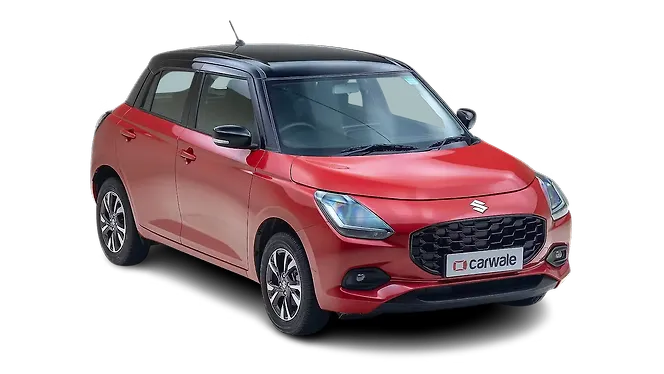
1. Maruti Suzuki Swift – Best All-Round Small Car
The Maruti Suzuki Swift remains one of the easiest small cars to recommend to a broad range of Indian buyers.
It combines compact dimensions with a surprisingly usable cabin, easy manoeuvrability, strong fuel efficiency and an enormous service network. The latest Swift uses Maruti Suzuki’s 1.2-litre Z-Series petrol engine.
The petrol manual has a claimed fuel efficiency of 24.8 km/l, while the AMT version is rated at 25.75 km/l. The CNG version is claimed to return approximately 32.85 km/kg.
Maruti has also expanded the Swift range with automatic S-CNG variants, combining a factory CNG system with an automated manual transmission—particularly useful for buyers who spend a lot of time in congested city traffic.
Why consider the Swift?
The Swift offers:
- 1.2-litre petrol engine
- Manual and AMT options
- Factory-fitted CNG
- Automatic CNG variants
- Six airbags
- ABS with EBD
- Electronic Stability Program
- Hill Hold Assist
- Rear AC vents on applicable variants
- Strong claimed fuel efficiency
Pricing currently begins at approximately ₹5.84 lakh ex-showroom.
Best suited for
First-time buyers, young families and people looking for one compact car that can comfortably handle both daily city driving and occasional highway trips.
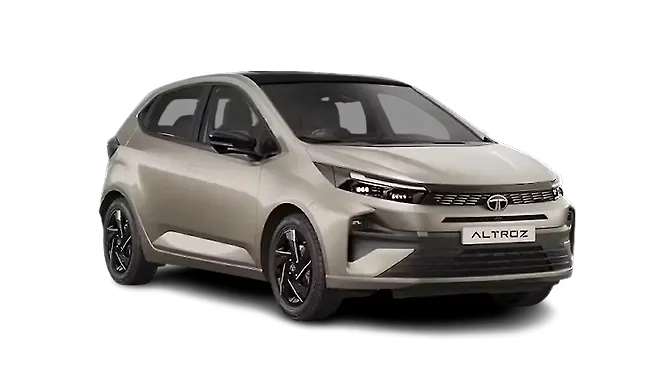
2. Tata Altroz – Best Small Car for Safety-Focused Buyers
For buyers who place crash protection high on their priority list, the Tata Altroz deserves serious consideration.
The current Altroz achieved a 5-star Bharat NCAP rating, scoring 29.65/32 for Adult Occupant Protection and 44.90/49 for Child Occupant Protection. The Bharat NCAP rating applies across a substantial range of petrol, diesel and CNG variants.
That is particularly significant because many hatchbacks on sale in India do not yet have directly comparable current Bharat NCAP results.
The Altroz is also unusually versatile when it comes to engines. Tata offers petrol, CNG and a 1.5-litre diesel, making it one of the few remaining diesel hatchbacks in India. Automatic options include AMT and DCA depending on the powertrain and variant.
Current market pricing places the entry Altroz at approximately ₹6 lakh ex-showroom.
Why consider the Altroz?
- 5-star Bharat NCAP rating
- Six airbags and ESC across the rated range
- Petrol, CNG and diesel choices
- Manual, AMT and DCA options
- Spacious premium-hatchback cabin
- Strong highway stability
- Good choice for family use
Best suited for
Families who want a compact hatchback but are unwilling to compromise heavily on safety, cabin space or highway usability.
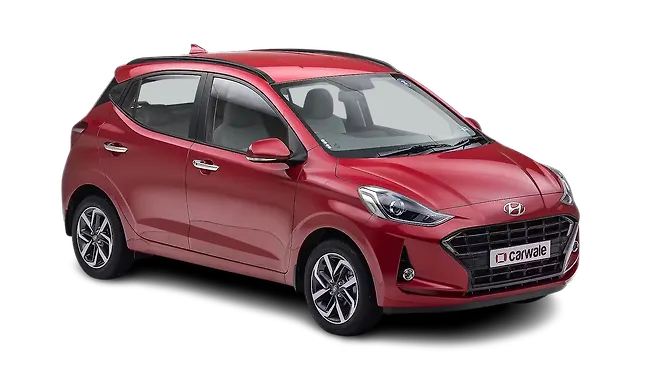
3. Hyundai Grand i10 NIOS – Best for City Comfort
The Hyundai Grand i10 NIOS is one of the most refined city-focused hatchbacks available in India.
It measures just 3,815 mm in length, making it easy to use in crowded urban environments, while still providing enough cabin space for a small family.
Hyundai offers a 1.2-litre four-cylinder petrol engine producing 83 PS, along with a petrol-CNG version. Petrol buyers can choose between a manual gearbox and AMT.
Another major advantage is safety equipment. Hyundai lists six airbags across the Grand i10 NIOS range, while selected variants additionally receive ESC, Vehicle Stability Management and Hill Start Assist.
The Grand i10 NIOS currently starts at approximately ₹5.60 lakh ex-showroom.
Why consider the Grand i10 NIOS?
- Smooth four-cylinder petrol engine
- Petrol and CNG versions
- Manual and AMT options
- Six airbags
- Rear AC vents
- Available wireless charging
- Comfortable and well-finished cabin
- Easy city manoeuvrability
Best suited for
Buyers who spend most of their time in city traffic and value comfort, refinement and features more than outright performance.
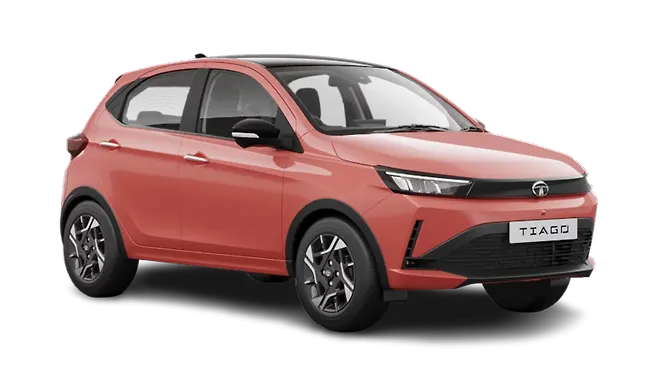
4. Tata Tiago – Strong Value with Petrol and CNG Automatics
The Tata Tiago sits in an interesting position between entry-level hatchbacks and more expensive premium models.
The current range starts at approximately ₹4.77 lakh ex-showroom, making it relatively accessible despite offering a 1.2-litre engine and a substantial feature set.
The Tiago is particularly interesting for CNG buyers. Tata’s twin-cylinder iCNG system helps preserve usable luggage space, and the Tiago is available with CNG plus AMT, something still relatively uncommon in this part of the market.
The older Tiago/Tigor platform received four stars for adult occupant protection and three stars for child occupant protection in Global NCAP testing in 2020. However, buyers should remember that this was conducted under an older Global NCAP protocol and should not be directly compared with newer Bharat NCAP results.
Why consider the Tiago?
- Competitive starting price
- 1.2-litre petrol engine
- Petrol and CNG options
- AMT available
- CNG automatic available
- Good ride quality
- More substantial highway feel than many entry-level hatchbacks
Best suited for
Budget-conscious buyers who still want a solid-feeling hatchback with usable highway ability and multiple fuel choices.
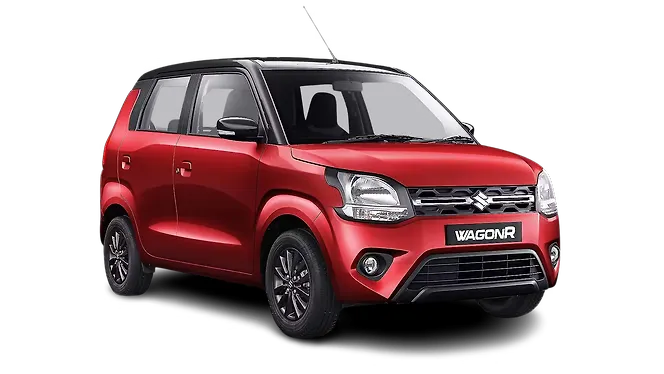
5. Maruti Suzuki WagonR – Best Small Car for Space
Few compact cars use their exterior dimensions as efficiently as the Maruti Suzuki WagonR.
Its tall-boy design provides generous headroom and makes getting in and out particularly easy. More importantly, the WagonR offers a 355-litre boot, impressive for a car measuring only around 3.65 metres long.
Maruti offers both 1.0-litre and 1.2-litre petrol engines, manual and AGS transmissions, factory CNG and even a Flex Fuel variant in the current range. Six airbags are also available as standard in the current lineup.
The CNG version has a claimed efficiency of approximately 33.47 km/kg.
Prices currently start at approximately ₹4.99 lakh ex-showroom.
Why consider the WagonR?
- Excellent headroom
- Large 355-litre boot
- Easy entry and exit
- 1.0L and 1.2L petrol engines
- CNG available
- Manual and AMT available
- Six airbags
- Strong service and parts availability
Best suited for
Families who value cabin space and practicality more than sporty styling.
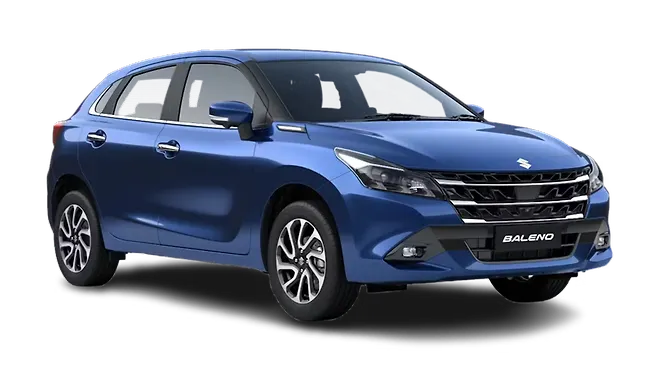
6. Maruti Suzuki Baleno – Best Premium Small Car for Technology
The Baleno received a significant update in September 2026, making this one of the most important changes to the Indian hatchback market this year.
The 2026 Baleno starts at approximately ₹5.99 lakh ex-showroom and extends to roughly ₹9.99 lakh depending on the variant.
More importantly, the latest Baleno introduces Level 2 ADAS on the applicable high-end variant. The system includes features such as Advanced Emergency Braking, Adaptive Cruise Control, Lane Keep Assist, Lane Departure Prevention and Forward Collision Warning.
Six airbags, ABS with EBD, ESP, Hill Hold Control and a tyre-pressure monitoring system form part of the updated safety package.
Maruti has also introduced automatic CNG variants following the launch of its Auto Green Mission in September 2026.
Why consider the Baleno?
- Spacious premium-hatchback cabin
- Updated 2026 design
- Six airbags
- Level 2 ADAS on applicable variant
- Petrol and CNG
- Manual and automatic transmissions
- Automatic CNG option
- Strong fuel-efficiency focus
Best suited for
Buyers who want the practicality and ownership convenience associated with Maruti Suzuki but want more space and technology than the Swift.
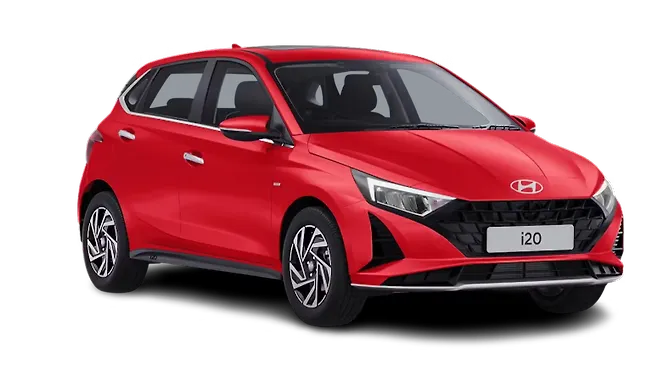
7. Hyundai i20 – Best for Premium Comfort and Features
The Hyundai i20 is almost four metres long, but it remains a hatchback and is compact enough for everyday city use.
Its 3,995 mm length and 2,580 mm wheelbase give it substantially more cabin space than entry-level small cars.
The current i20 uses Hyundai’s 1.2-litre Kappa petrol engine and offers either a five-speed manual or IVT automatic transmission.
Hyundai also provides six airbags as standard, with features such as ESC, Vehicle Stability Management, Hill Start Assist, ISOFIX and a tyre-pressure monitoring system depending on specification.
Pricing starts at approximately ₹5.99 lakh ex-showroom.
Why consider the i20?
- Spacious cabin
- Premium interior
- Smooth four-cylinder petrol engine
- IVT automatic option
- Six airbags
- Large touchscreen on higher variants
- Premium audio and connected features available
- Comfortable highway manners
Best suited for
Buyers looking for a premium small car where comfort, technology and refinement are more important than obtaining the lowest possible running cost.
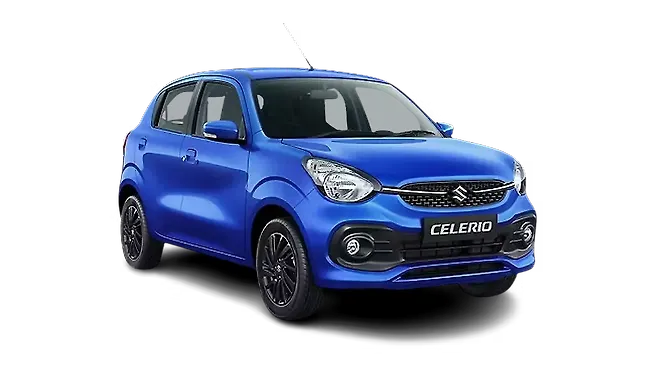
8. Maruti Suzuki Celerio – Best for Fuel-Efficient City Driving
If fuel economy and ease of driving are your main priorities, the Maruti Suzuki Celerio remains difficult to ignore.
The 1.0-litre petrol Celerio is available with both manual and AGS automatic transmissions.
Maruti currently quotes up to 26 km/l for the petrol AGS, while the CNG version is rated at approximately 34.43 km/kg.
Its compact dimensions also make the Celerio particularly convenient in crowded cities.
Prices start at approximately ₹4.70 lakh ex-showroom, with factory CNG and automatic variants available further up the range.
Why consider the Celerio?
- Excellent claimed fuel efficiency
- Compact dimensions
- Light controls
- Petrol and factory CNG
- Manual and AMT
- Affordable running costs
Best suited for
Daily commuters covering significant distances who care more about fuel economy and ease of use than outright performance.
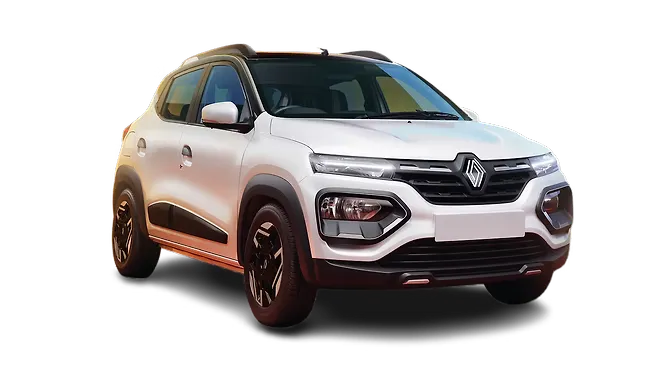
9. Renault Kwid – Best SUV-Inspired Entry-Level Small Car
The Renault Kwid continues to offer a distinctive alternative to conventional entry-level hatchbacks.
It has an SUV-inspired exterior, 184 mm ground clearance and a surprisingly useful 279-litre boot.
The current Kwid uses a 1.0-litre petrol engine producing around 69 PS and can be configured with either a manual transmission or AMT.
The current range starts at approximately ₹4.53 lakh ex-showroom.
Higher variants add useful equipment such as an 8-inch touchscreen, reversing camera and steering-mounted controls.
Why consider the Kwid?
- SUV-inspired styling
- 184 mm ground clearance
- 279-litre boot
- 1.0-litre petrol engine
- Manual and automatic options
- Compact exterior dimensions
Best suited for
Urban buyers who want an inexpensive small car but prefer a more rugged design and higher ground clearance.
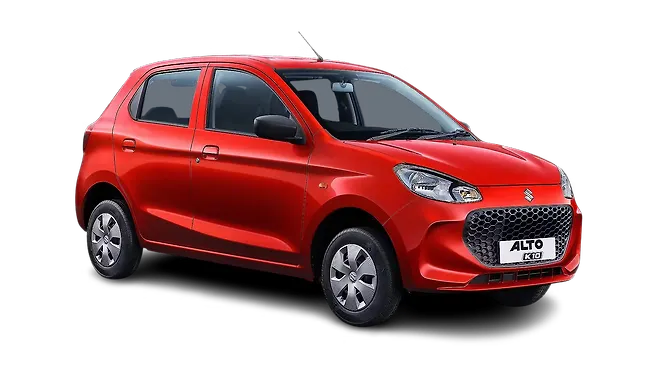
10. Maruti Suzuki Alto K10 – Best Affordable Small Car
The Alto K10 remains one of India’s most accessible new cars.
Prices currently start at approximately ₹3.70 lakh ex-showroom, placing it comfortably below many other hatchbacks on this list.
It uses Maruti Suzuki’s 998 cc K-Series engine and is available with manual and AGS automatic transmissions, along with a factory-fitted CNG option.
The petrol AGS has a claimed efficiency of around 24.90 km/l, while the CNG version is rated at approximately 33.40 km/kg.
Importantly, the latest Alto K10 range now includes six airbags as standard, alongside ABS with EBD and reverse parking sensors.
Why consider the Alto K10?
- Very low starting price
- Compact dimensions
- Low running costs
- Manual and AMT options
- Factory CNG
- Six airbags
- Strong Maruti service coverage
Best suited for
First-time car buyers, households purchasing a second city car and anyone prioritising affordability and low running costs.
Which Small Car Should You Buy?
There is no single small car that is ideal for every buyer.
If you want a balanced combination of efficiency, performance, ownership convenience and price, the Maruti Suzuki Swift is one of the strongest all-round choices.
For buyers putting greater emphasis on independently tested crash safety, the Tata Altroz stands out with its current 5-star Bharat NCAP rating. Remember, however, that not every competing hatchback has been tested under the same current protocol, so star ratings from different programmes and years should not be compared blindly.
If cabin space matters most, the WagonR deserves consideration. For premium interiors and comfort, look at the Hyundai i20 or Baleno.
High-mileage users should investigate the Celerio CNG, WagonR CNG and other factory-fitted CNG options, while buyers working with a tighter purchase budget can start with the Alto K10.
Best Small Cars by Requirement
| Requirement | Car to Consider |
|---|---|
| Best all-rounder | Maruti Suzuki Swift |
| Safety-focused premium hatchback | Tata Altroz |
| Best city comfort | Hyundai Grand i10 NIOS |
| Value-focused choice | Tata Tiago |
| Best cabin practicality | Maruti Suzuki WagonR |
| Features & technology | Maruti Suzuki Baleno |
| Premium comfort | Hyundai i20 |
| Fuel economy | Maruti Suzuki Celerio |
| Ground clearance & city use | Renault Kwid |
| Lowest purchase budget | Maruti Suzuki Alto K10 |
Petrol vs CNG vs Diesel: Which Is Better for a Small Car?
Petrol
Petrol is usually the easiest choice for buyers with moderate annual running.
Advantages include smoother performance, lower upfront cost and easier fuel availability.
Choose petrol if your annual driving is limited or you want the widest choice of automatic transmissions.
CNG
Factory-fitted CNG makes sense for owners covering high monthly kilometres, especially where CNG is easily available.
Cars such as the Swift, WagonR, Celerio, Tiago, Altroz, Baleno and Grand i10 NIOS currently offer factory CNG configurations.
However, calculate the additional purchase price against your expected annual fuel savings rather than choosing CNG solely because the advertised mileage is higher.
Diesel
Diesel choices have become extremely rare among small hatchbacks.
The Tata Altroz remains one of the notable options offering a diesel engine, making it worth examining for buyers with substantial highway running.
What to Check Before Buying a Small Car
Do not make the purchase decision using mileage or ex-showroom price alone.
Take a proper test drive with the family members who will regularly use the car. Pay attention to visibility, seating position, rear-seat space, ride quality, steering weight and parking ease.
Compare the on-road price, not just the advertised starting price. Registration, insurance, accessories, extended warranty and variant upgrades can create a significant difference between the headline price and the amount you actually pay.
Safety equipment also deserves careful examination. Look beyond the number of airbags and consider ESC, ABS with EBD, ISOFIX child-seat mounts, three-point seatbelts and available crash-test results.
For automatic buyers, also understand the transmission type. AMT/AGS systems are relatively economical but can have noticeable pauses while shifting. Hyundai’s IVT in the i20 offers a smoother driving experience but comes at a higher price.
Finally, consider your expected annual running before choosing between petrol, CNG and diesel.
Maintaining a Small Car for Better Mileage and Reliability
Buying an efficient car is only half the story. Poor maintenance can gradually reduce mileage, braking performance and reliability.
Follow the manufacturer’s recommended service intervals, use the correct grade of engine oil and replace consumables such as air filters, oil filters and spark plugs when required.
Tyre pressure also has a direct effect on fuel consumption and tyre life. Check it periodically rather than waiting for the tyre to visibly appear underinflated.
If you regularly drive in heavy city traffic, pay particular attention to brakes, clutch condition, battery health and cooling-system maintenance.
For owners in Ghaziabad and Noida, AutoFixers provides periodic car servicing, mechanical repairs, diagnostics, AC service, brake and suspension work, denting and painting, along with doorstep pickup and drop.
Frequently Asked Questions
Which is the best small car in India in 2026?
There is no universal winner, but the Maruti Suzuki Swift offers a particularly strong combination of price, fuel efficiency, automatic and CNG options, safety equipment and service accessibility.
Which small car is the cheapest in India?
Among the cars covered in this comparison, the Maruti Suzuki Alto K10 starts at approximately ₹3.70 lakh ex-showroom. Maruti’s S-Presso is another budget option and currently starts even lower, at approximately ₹3.50 lakh ex-showroom.
Which small car gives the best mileage?
Among the factory-CNG cars discussed here, the Celerio CNG has a claimed efficiency of approximately 34.43 km/kg. Actual mileage will vary depending on traffic, driving style, load, AC use and road conditions.
Which small car has a 5-star safety rating?
The current Tata Altroz has a 5-star Bharat NCAP rating, scoring 29.65/32 for adult occupant protection and 44.90/49 for child occupant protection.
Which small car is best for a family of four?
The WagonR, Altroz, Baleno, i20, Grand i10 NIOS and Swift are all worth considering. The right choice depends on whether your priority is cabin space, safety, mileage, features or overall purchase price.
Which small cars are available with automatic transmission?
The Swift, Altroz, Grand i10 NIOS, Tiago, WagonR, Baleno, i20, Celerio, Kwid and Alto K10 all offer some form of automatic transmission in their current lineups.
Which small car is best for city traffic?
The Alto K10, Celerio, Grand i10 NIOS and Swift are particularly easy to manoeuvre in city traffic. Buyers facing frequent congestion may want to prioritise an AMT, AGS or IVT automatic variant.
Is CNG better than petrol for a small car?
CNG can significantly reduce fuel cost for high-mileage users, but it normally increases the initial purchase price. Petrol can make more financial sense for cars driven relatively few kilometres each month.
Final Thoughts
The Indian small-car market in 2026 offers much more than basic transportation.
The Alto K10 and Celerio continue to make economical city ownership accessible. The Swift and Grand i10 NIOS offer stronger all-round packages, while the WagonR prioritises practical interior space.
Moving higher up the market, the Baleno and i20 provide increasingly premium interiors and technology, while the Tata Altroz stands apart with its current 5-star Bharat NCAP safety rating and unusually broad petrol, CNG and diesel powertrain range.
Instead of choosing purely on price, shortlist two or three models based on your actual usage, compare equivalent variants, calculate the on-road cost and running expense, and take a proper test drive before making the final decision.